

The Second Spin: Re-reading Blake Nelson’s 'Girl'
Revisiting the uncool in a classic '90s coming-of-age rock novel

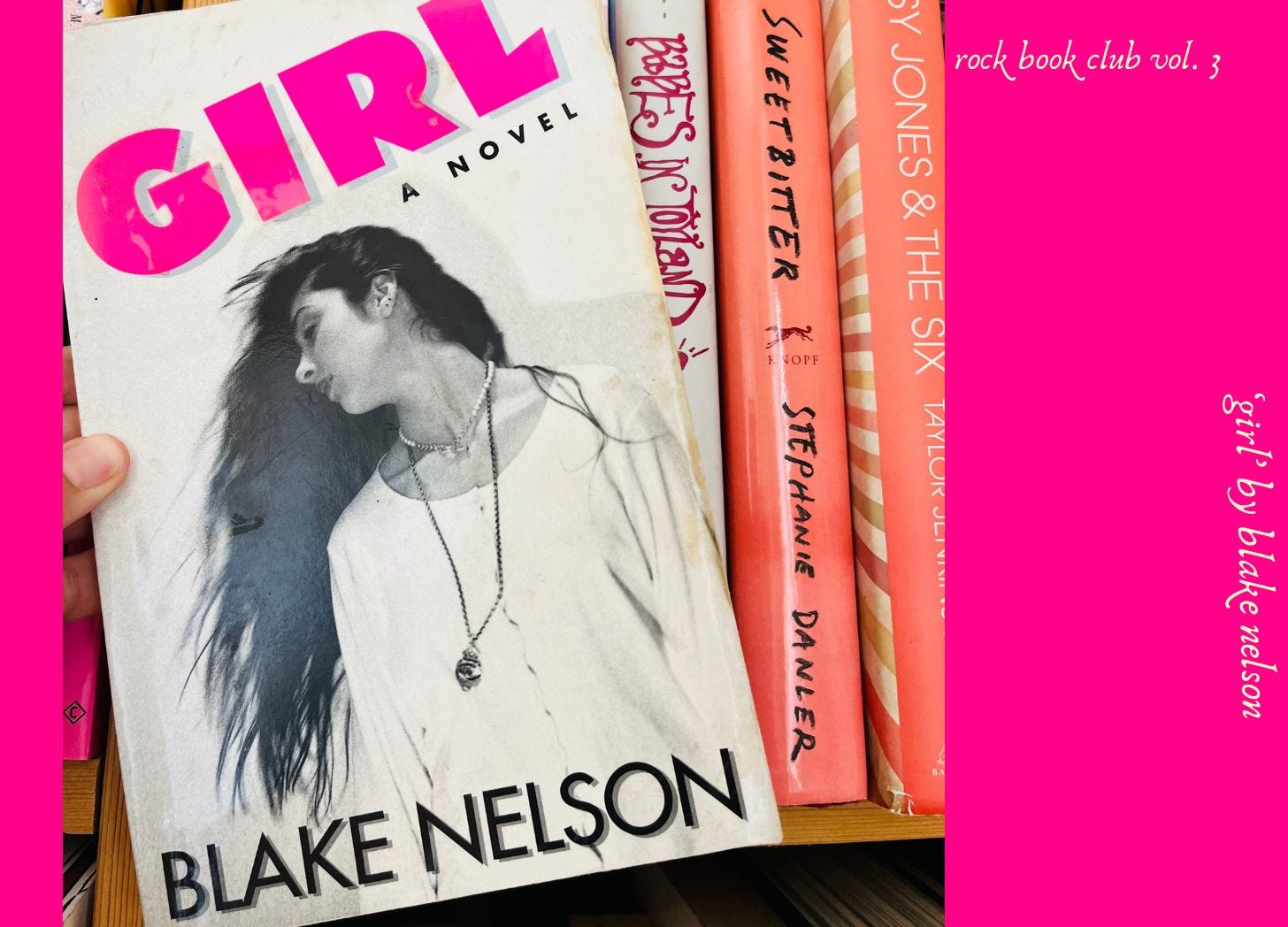
As the edges of the nineties and my adolescence bleed into the sepia tones of years gone by, I find myself frequently revisiting the pop culture artifacts that shaped my braces-tightening, bushy-eyebrow years. Sometimes it is an album I haven’t listened to since 1996, like Tuscadero’s Pink Album, and other times it is falling down a YouTube rabbit hole to re-watch scenes from the iconic “Boiler Room” episode of My So-Called Life. I like to see how adult me reacts to these cultural touchstones, and whether they actually hold up to the mythology we created in our youth.
This nostalgic curiosity led me to re-read Blake Nelson’s 1994 coming-of-age novel, Girl. If you were an alt-teen back then, you might remember that the story actually started as a wildly popular column in Sassy magazine, the ultimate nineties bible for us weird girls.

To add one more nineties layer, the book was originally recommended to me by a virtual friend (who is still my IRL friend today) in an AOL indie rock chat room. This was long before Amazon reviews or Google existed, so I took his digital word for it, drove to the bank to withdraw exactly twenty dollars out of my summer job savings, and headed straight to Barnes and Noble.
Holding it in the fiction section, I was instantly sold by the hot pink lettering and a back cover loaded with keywords like Portland, Oregon, bands, and the idea of sex. Not to be a teenage horn dog, but SOLD. I didn’t even bother to read the rest of the jacket, completely ignoring a glowing blurb from bestselling author Wally Lamb. Sex in the Pacific Northwest soundtracked by indie rock was more than enough for this suburban teenager, but the question now was how the story would hold up for a middle-aged adult.
After putting my son to sleep, I tucked into bed curious about my adult impression of a novel that meant so much to me as a teen. While a lot of the plot details came rushing back, reading it with older eyes made the deeper themes pop. Instead of living through it, I was able to now look back on my own quintessential punk rock coming-of-age moments—like when I realized I had nothing in common with my classmates and trying to fit in was useless. It was that exact pivot point where you find your tribe and slowly become “the weird kids at school.” You find yourself surrounded by guys in homemade, Sharpie-drawn Dead Kennedys t-shirts, girls in cheap thrift store dresses that smell like mothballs, chain wallets, and experimental haircuts. Together, you start going to shows, collecting seven-inch records, and talking about abstract ideas like life after high school.
This specific teenage evolution is the beating heart of Girl. Set against the backdrop of the nineties Portland scene, the novel follows the woes and wins of sixteen-year-old Andrea Marr as she outgrows her childhood friend Darcy and navigates toward more like-minded buddies—like Cybil, the girl with the shaved head who sings lead for Sins of Our Fathers. We watch Andrea shed her conventional girlhood as she finds the people who, like us, needed music to breathe in what felt like suburban oppression (to be totally hyperbolic about it). She begins experimenting with her fashion by drowning in ill-fitting vintage dresses, a specific visual detail that Nelson absolutely nailed, and trades mall culture for indie rock clubs. Naturally, this new world comes with a love interest in the form of Todd Sparrow, the enigmatic frontman of the band Color Green.
Andrea is handed her first real look at adulthood, and it is certainly no trip to the local frozen yogurt shop. As she navigates bored guys in bands, blasé girls with Jackie O. bobs, and messy apartments, she tries to make sense of exactly where she fits into this new world of cool, not realizing that as a teenager, you never truly will.
The charm of that age is actually being uncool and knowing it. This right here is the messy, character-building shit that ultimately makes you a cool adult; one people actually like being around.
At the time, of course, it just feels catastrophic and humiliating, and Nelson captures that emotional chaos wrapped in self-awareness in a way that resonated with me as a teen and hits just as hard now.
Disappointingly, the book’s film adaptation remains entirely regrettable, featuring a logline that seemed to target a completely different audience than the novel ever intended. The tagline “It’s all about boys!” makes both teenage and adult me cringe, because the story is absolutely not about boys, as they are merely a plot device to help the protagonist find herself.
During my re-read, I was surprised that teenage me wasn’t shocked by—or had even noticed—Andrea’s affair with Todd, the twenty-two-year-old lead singer. Maybe it’s a sign of the times we’re in, but adult me immediately flagged the ick factor of a grown man having condomless sex with a sixteen-year-old high schooler in this “book for teens.”
Eventually, I realized why it didn’t faze me as a kid. There was no grand, moralistic lesson to be learned in the narrative other than the practical advice to avoid guys in local bands. The event just happens, and the story continues. Much like real life. Putting the book down, I mused for a second on whether any of this would pass in modern young adult fiction without a heavy-handed message attached. Probably not, but that absence of lecturing is precisely why this book resonated deeply with Gen X teenagers. We didn’t want to learn a lesson in good vs. bad; we didn’t want our hands held; we just wanted a good story, and Nelson more than delivers.
The re-read also evoked a powerful wave of rock nostalgia. As a teenager who used to go to shows in old-lady thrift shop dresses, I related completely to the atmosphere Nelson conjures. He does a fantastic job capturing the specific magic of going to gigs with your friends.
Hanging out on the floor of sweaty rock clubs with our backpacks and braces, we got to leave our dorky high school personas behind and pretend we belonged to something bigger.
After a while, much like Andrea, we actually did belong because we had found our people.
So, did the book pass my personal test of time? It absolutely did. I thoroughly enjoyed the second spin of this timeless coming-of-age novel born from the pages of Sassy magazine. The characters’ transitions are well-defined, the rewards are hard-won, and it remains a fun read packed with all the self-doubt and drama that makes adult me smile, incredibly grateful that the teenage angst paid off so well.
Book review of an old favorite is a cool angle: DId it age well? Nicely done. Conclusion: A good book is a good read anytime but the music it's based on may not resonate the same way.